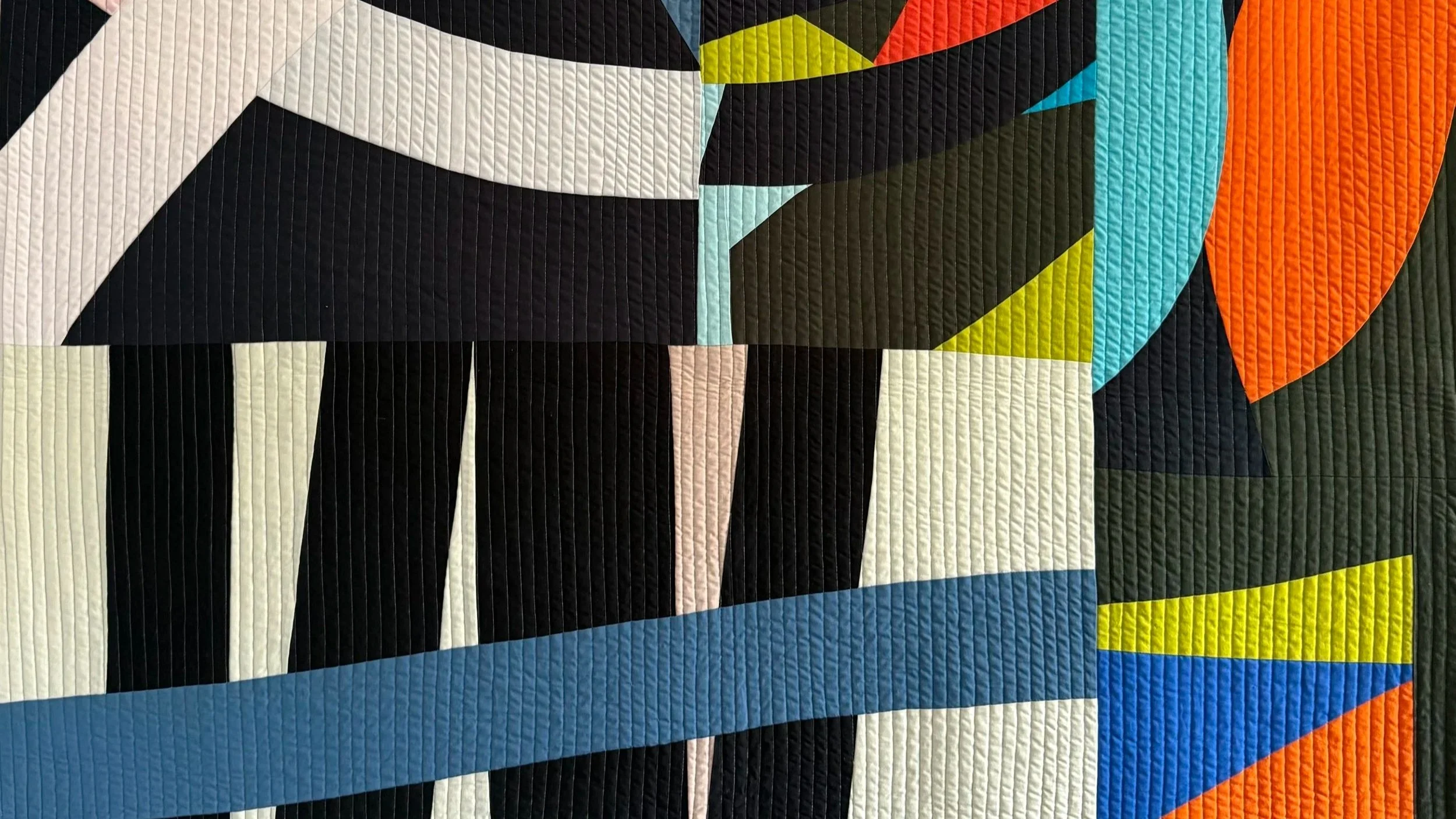
Robyn Clout, Perception (detail), 2026, cotton fabric, cut improvisational, cotton thread, cotton/poly batting. Image courtesy of the artist.
Presented by the WA Quilters Association, the biennial, juried exhibition stitched and bound returns to MJAC in 2026 featuring new works that push the boundaries of contemporary quilting.
The 2026 exhibition marks the 15th edition of stitched and bound, with 50 works by 43 artists. After premiering at MJAC, the exhibition will embark on a regional tour to galleries in Katanning, Geraldton and Carnarvon.
This year’s artists are: Liz Arnold & Marilyn Clark-Murphy, Delys Brady, Robyn Clout, Lesley Clugston, Meg Cowey, Merle Topsi Davis, Marilyn Davis-Moore, Julie Devereux, Victoria Edwards, Ross Ellis, Cynda Empsall, Scott Fisher, Pat Forster, Robin Gartner, Dimity Gregson, Gail Hawes, Tina Hoek, Meagan Howe, Deb Hunter, Penny Jewell, Janine Judge, Jocelyne Leath, Lana Lefroy, Julie Livingstone, Susan Mader, Denise Mallon, Julie McAllister, Glenyce McGauchie, Lesley Meaney, Virginia O’Keeffe, Jan Rowe, Nadja Sevic, Sia Smyth, Linda Stokes, Jane Stone, Helen Sugars-Duff, Martien van Zuilen, Lesley Warren, Barbara Weeks, Louise Wells, Judith Wilton and Mo Woltersdorf.
Alongside the exhibition, the CoLab Space turns into a hub of textile joy when twelve stitched & bound artists work in residence and open their arts practice to visitors. Visit the residency page here: stitched and bound AIR
HISTORY
WAQA’s first contemporary quilting exhibition, The Razor’s Edge, was held in Fremantle in 1995 as an opportunity for local textile artists, who had mastered traditional quilt making techniques, to present works using more adventurous ideas, materials and methods. The exhibition, now known as stitched and bound, has since become one of the leading exhibitions of contemporary quilts in Australia. Open to all Western Australian textile artists, works are selected by an independent jury of three professionals representing a wide range of contemporary quilters, textile artists, curators, educators and practitioners. Whilst works must possess the structural characteristics of a quilt, artists are encouraged to push the boundaries of traditional quilting and freely express their ideas.